The Knight Expels Goldmund
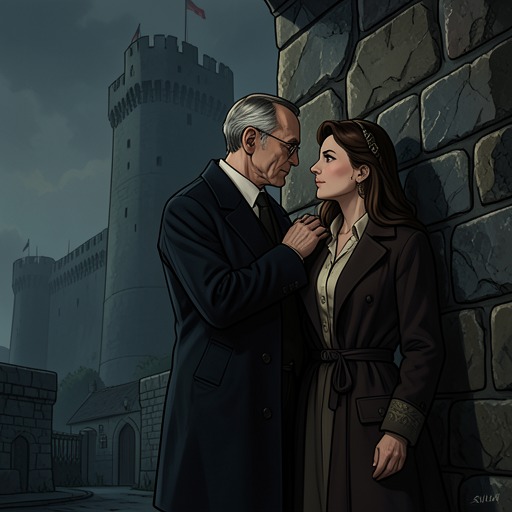
Narcissus and GoldmundThe Knight Expels Goldmund is the turning point that ends Goldmund’s stay in the knight’s household. After Lydia decides to put an end to the situation involving herself, Julie, and Goldmund, the knight leads Goldmund away from the house and orders him never to return. The episode transforms a household conflict into a permanent separation: Goldmund must resume the wandering life he had left behind, while the two sisters and their home become inaccessible to him.
Disclosure and Decision
The expulsion follows a night of confusion and estrangement among the three young people. Lydia and Julie return to their bedroom without speaking; each lies awake alone, and Goldmund remains awake until after midnight. The household is described as held by grief, contradiction, and alienation. At daybreak Lydia gets up, kneels in prayer before the small wooden Saviour in her room, and asks her father to hear her as soon as she hears him on the stairs.
Lydia has decided to put an end to the matter, but her decision is not presented as a simple accusation. She has not separated her fear for Julie’s virginity from her own jealousy. When she tells the knight what she has decided to disclose, she does not mention Julie’s part in the adventure. That omission shapes what the knight is told and precedes the action he takes against Goldmund.
The Knight Leads Goldmund Away
Goldmund discovers that something has changed when he enters the writing room at the usual hour and sees the knight dressed for a journey rather than in the slippers and housecoat he normally wears while they write. The knight tells him to put on his cap and accompany him for a walk. Goldmund follows him downstairs, across the courtyard, and out through the gate.
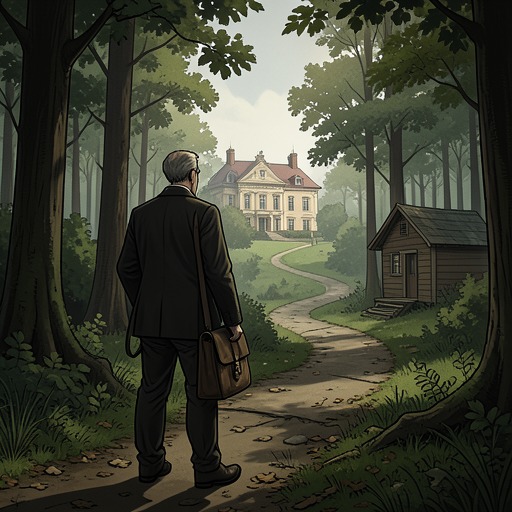
They walk in silence through the snow at dawn, the knight ahead and Goldmund following. Goldmund repeatedly looks back toward the house, his room’s window, and the steep roof. As these landmarks disappear, he understands that he will never again see the house, the study, the bedroom, or the sisters. Although he had often imagined leaving suddenly, the actual departure hurts because it is imposed on him and takes place without the parting he might have chosen.
For about an hour the two continue without speaking. Goldmund considers whether the armed knight might kill him, but judges that his life is not in danger: he could run, and the older man would be left helpless with his sword. What pains him instead is being silently led away by a man who had been his master. The knight finally stops and breaks the silence.
Sentence and Exile
The knight tells Goldmund to continue alone in the same direction and resume the wanderer’s life he had led before. He says that Goldmund will be killed if he ever shows his face again near the house. At the same time, he says he does not wish to take revenge and admits that he should have been more intelligent than to allow so young a man to live intimately with his daughters. He sends Goldmund away and asks God to forgive him.
The order makes the separation explicit and permanent: Goldmund is not merely dismissed from his place in the household but forbidden to return to its neighborhood on pain of death. The knight remains behind in the snowy morning, watching until Goldmund disappears over the next ridge. Goldmund’s departure therefore ends with both men left apart: one stands by the path, and the other continues alone.
Consequences and Significance
The episode reverses Goldmund’s earlier imagined freedom to leave whenever he wished. His life under the knight’s roof ends not by his own choice but through an expulsion prompted by the household’s private conflict. The backward looks at the house give the departure its emotional weight: the familiar rooms and the two sisters recede together, and cannot be recovered by turning back.
The knight’s words combine a threat with an acknowledgment of his own judgment. He condemns Goldmund’s intimacy with his daughters, yet also recognizes that he had allowed the young man to live in that relationship with them. The scene does not resolve the sisters’ opposing feelings or explain what follows for them; instead, it closes Goldmund’s access to the household. His next condition is named as the wanderer’s life, a return to solitude made compulsory by the knight’s order.